Hospitality Marketing and SalesUnit 410 min read
Segmentation, Targeting & Positioning: Strategies for Hospitality Success
Unit 4 of Hospitality Marketing and Sales explores how hotels and restaurants divide markets (segmentation), choose ideal customers (targeting), and craft unique brand images (positioning) to stand out—with real-world examples from Nepal’s hospitality industry and global leaders.
Core Concepts: The 3Ps of Hospitality Marketing
Segmentation, targeting, and positioning (STP) form the strategic foundation of hospitality marketing. They ensure resources are used efficiently by focusing on the right customers with the right offerings.
1. Market Segmentation: Dividing the Market
Segmentation splits the broad hospitality market into smaller, homogeneous groups based on shared characteristics. This allows businesses to tailor their products and marketing efforts.
Types of Segmentation in Hospitality
mindmap
  root((Market Segmentation in Hospitality))
    Geographic
      "Location-based (e.g., Kathmandu vs. Pokhara)"
      "Urban vs. rural (e.g., Thamel vs. Chitwan)"
    Demographic
      "Age (e.g., family resorts vs. backpacker hostels)"
      "Income (e.g., luxury hotels vs. budget stays)"
      "Gender (e.g., women-only retreats)"
      "Occupation (e.g., business travelers vs. tourists)"
    Psychographic
      "Lifestyle (e.g., adventure seekers vs. luxury lovers)"
      "Personality (e.g., eco-conscious travelers)"
      "Values (e.g., cultural heritage seekers)"
    Behavioral
      "Usage rate (e.g., frequent flyers vs. occasional tourists)"
      "Benefits sought (e.g., relaxation vs. nightlife)"
      "Brand loyalty (e.g., repeat guests at Hyatt vs. first-timers)"
    Occasion-Based
      "Seasonal (e.g., winter ski resorts vs. summer beach hotels)"
      "Special events (e.g., wedding packages vs. MICE events)"
Why Segment?
- Precision Marketing: Avoids wasting resources on irrelevant audiences.
- Customized Offerings: Hotels can design packages for specific groups (e.g., honeymooners vs. solo backpackers).
- Competitive Edge: Differentiates from competitors (e.g., Dwarika’s Heritage Hotel targets culture lovers, while Soaltee Crown appeals to business travelers).
2. Targeting: Choosing the Right Segments
Not all segments are profitable or feasible to target. Businesses must evaluate segments using criteria like:
- Measurability: Can the segment be quantified? (e.g., number of business travelers in Kathmandu)
- Accessibility: Can the hotel reach them? (e.g., digital ads for millennials vs. print ads for older tourists)
- Substantiality: Is the segment large enough? (e.g., solo travelers vs. a niche group of 50 people)
- Responsiveness: Will they respond to marketing efforts? (e.g., eco-tourists may pay more for sustainable hotels)
Targeting Strategies
| Strategy | Description | Example in Nepal |
|---|---|---|
| Undifferentiated | Single marketing mix for the entire market. | Hotel Everest View (basic rooms for all comers). |
| Differentiated | Multiple segments, each with a unique offering. | Kathmandu’s Thamel hotels (budget hostels, mid-range, luxury). |
| Concentrated | Focus on one niche segment. | Yeti Mountain Home (targets trekkers and adventure seekers). |
| Micromarketing | Customized for individual customers (e.g., loyalty programs). | Nabil Bank’s travel insurance (tailored for frequent flyers). |
Worked Example: Targeting Business Travelers in Kathmandu
- Segment: Business travelers (30-55 years, high income, frequent flyers).
- Why Target?: They spend more on rooms, F&B, and meetings.
- How?:
- Location: Hotels near Thamel’s business hubs (e.g., Hotel Yak & Yeti).
- Services: Free Wi-Fi, meeting rooms, 24/7 room service.
- Promotion: LinkedIn ads, corporate partnerships.
3. Positioning: Crafting the Brand Image
Positioning is how a hotel or restaurant is perceived in the minds of consumers relative to competitors. It answers:
- Who are we? (e.g., luxury, budget, eco-friendly)
- Who are we not? (e.g., not a party hotel if targeting families)
- Why should customers choose us?
Positioning Strategies
flowchart TD
    A["Positioning Strategies"] --> B["Product-Based"]
    A --> C["Price-Based"]
    A --> D["Benefit-Based"]
    A --> E["Competitor-Based"]
    B --> B1["Quality (e.g., 'World’s 5th Best Hotel')"]
    B --> B2["Features (e.g., 'First hotel with a rooftop pool in Kathmandu')"]
    C --> C1["Premium (e.g., **Soaltee Crown**)"]
    C --> C2["Budget (e.g., **Hotel Himalaya**)"]
    D --> D1["Convenience (e.g., '24/7 check-in')"]
    D --> D2["Experience (e.g., 'Cultural immersion')"]
    E --> E1["Against a competitor (e.g., 'Better service than Hotel Everest View')"]
How to Position Effectively
- Identify Competitors: Analyze what others offer (e.g., Dwarika’s Heritage Hotel vs. Hotel Himalaya).
- Choose a Unique Selling Proposition (USP): What makes you different?
- Example: Hotel Yak & Yeti positions itself as a cultural hub with local art and traditional Nepalese cuisine.
- Communicate Consistently: Use branding, ads, and customer interactions to reinforce the position.
- Example: The Dwarika’s tagline "Heritage Meets Hospitality" emphasizes its historical and cultural appeal.
In the Real World
eSewa & Khalti (Digital Payments)
- Segmentation: Targets tech-savvy millennials (18-35) and business professionals who need quick, secure transactions.
- Targeting: Focuses on urban areas (Kathmandu, Lalitpur) where digital adoption is high.
- Positioning: Positions itself as the "easiest way to pay" (vs. cash or competitors like IME Pay).
Daraz (E-Commerce)
- Segmentation: Divides customers into budget shoppers, luxury buyers, and bulk buyers (e.g., businesses).
- Targeting: Uses discounts for first-time buyers (budget segment) and exclusive deals for premium members.
- Positioning: "One-stop shop for everything" (vs. local markets or smaller e-commerce sites).
Nabil Bank (Travel & Insurance Services)
- Segmentation: Targets frequent international travelers, business travelers, and families.
- Targeting: Offers travel insurance bundles and forex services tailored to these groups.
- Positioning: "Your trusted partner for seamless travel" (vs. other banks with limited travel services).
Case Study: Himalayan Java (Coffee Chain)
- Segmentation:
- Students (affordable prices, study-friendly ambiance).
- Professionals (fast service, Wi-Fi).
- Tourists (local coffee experiences).
- Targeting:
- Students: Discounts with student IDs, late-night study sessions.
- Professionals: Corporate partnerships (e.g., free coffee for office teams).
- Positioning:
- "Nepal’s best coffee with a local touch" (vs. Starbucks or local tea shops).
- Uses social media to showcase Nepalese coffee culture.
Worked Example: Positioning a Boutique Hotel in Pokhara
Scenario: A small boutique hotel in Pokhara wants to attract honeymooners and adventure couples.
Segmentation:
- Demographic: Couples aged 25-40, middle to high income.
- Psychographic: Romantic, adventure-seeking, Instagram-savvy.
- Behavioral: Willing to pay extra for unique experiences.
Targeting:
- Location: Near Phewa Lake or World Peace Pagoda (romantic spots).
- Services:
- Private sunset boat rides.
- Couples’ spa packages.
- Adventure add-ons (paragliding, bungee jumping).
Positioning:
- USP: "Romance Meets Adventure in Pokhara".
- Marketing:
- Instagram ads with couples enjoying activities.
- Partnerships with wedding planners and adventure tour operators.
- Testimonials from past couples.
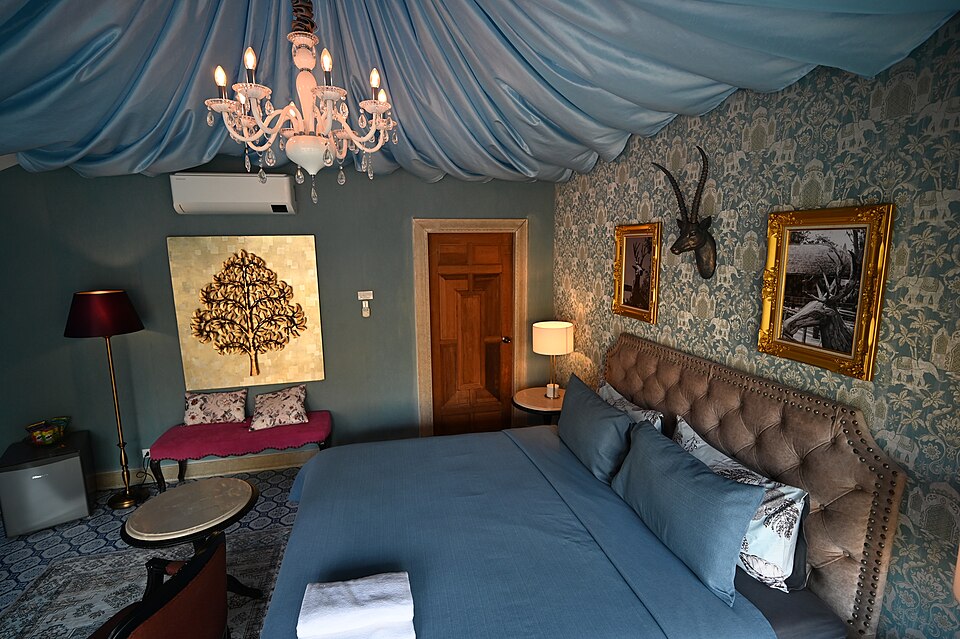 A mood board showing the hotel’s Instagram-worthy rooms, adventure activities, and romantic touches. (Image: PattayaPatrol, CC BY-SA 4.0, via Wikimedia Commons)
Common Mistakes to Avoid
- Over-Segmentation: Targeting too many small groups dilutes resources.
- Ignoring Competitors: Not researching how others position themselves (e.g., assuming no one offers adventure honeymoon packages).
- Inconsistent Messaging: Changing positions too often confuses customers.
- Assuming All Segments Are Profitable: Some segments may not generate enough revenue (e.g., targeting solo senior travelers in a party hotel).
Exam Tip
This unit is highly practical and often tested with:
Scenario-Based Questions:
- "How would you segment the market for a 5-star hotel in Kathmandu?"
- "Explain how Hotel Everest View could reposition itself to attract more business travelers."
- Tip: Use real examples (e.g., Soaltee Crown vs. Hotel Himalaya) to illustrate your answers.
Comparison Tables:
- "Compare differentiated and concentrated targeting strategies with examples from Nepal’s hospitality industry."
- Tip: Always include advantages/disadvantages of each strategy.
Case Studies:
- "Analyze how Dwarika’s Heritage Hotel uses segmentation, targeting, and positioning."
- Tip: Break it down into:
- Who they target (culture lovers, heritage tourists).
- How they position (historical ambiance, traditional decor).
- Why it works (unique selling proposition in a competitive market).
Diagrams:
- Expect questions on segmentation trees, positioning maps, or targeting strategy flowcharts.
- Tip: Practice drawing these quickly—examiners love visual answers!
Final Advice:
- Link theory to practice: Always relate concepts to Nepali hotels (e.g., Hotel Yak & Yeti, Soaltee Crown) or global brands (e.g., Marriott, Accor).
- Use real data: Mention statistics like "60% of tourists in Nepal are backpackers" to strengthen your answers.
- Be concise: Examiners prefer structured, point-wise answers over long paragraphs. Use bullet points for segmentation/targeting lists.
Based on the TU BHM syllabus for Hospitality Marketing and Sales (BHM330), unit 4.
Discussion
Loading…